
Radar scan checklist for UAE websites
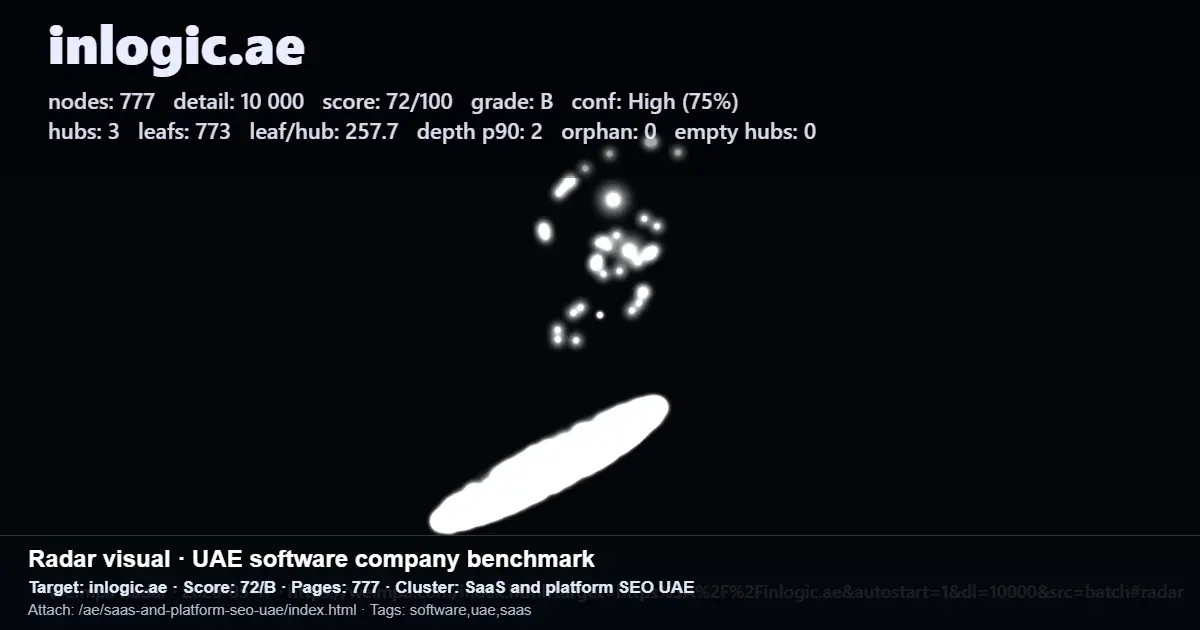
What this page covers
Radar scan checklist for UAE websites
Use a Radar scan on a live website to check whether the URL structure is clear, connected, and easy to read. A practical checklist starts with visible hubs, supporting leaf clusters, and no sections that look randomly detached.
For UAE websites, this helps teams review structure quickly and share a scan with colleagues or clients. If the site map makes sense without a long call, the scan is doing its job.
In brief
- Start with a real site scan, then check whether the structure looks sound, with clear hubs, supporting leaf clusters, and no pages that feel isolated or disconnected.
- Use the same review pattern each time: note the main findings, link them to specific fixes, then rescan to confirm whether the structure is easier to understand.
- Keep one limit in mind: Radar does not scan websites behind access controls. If discovery is blocked, use a URL snapshot import in JSON instead.
What to do
A grounded Radar scan checklist starts with structure visibility. Run a scan, then check whether the main sections appear as clear hubs and whether supporting pages form leaf clusters instead of isolated URLs. The goal is to see, at a glance, whether the site graph feels coherent.
Next, turn the scan into a repeatable workflow for the team. Review the output as a simple story: findings, fixes, and rescan. This keeps discussions focused on what the structure shows now, what should change next, and whether the revised version is clearer after another pass.
Finally, make the result easy to share. A useful scan output should still make sense when a teammate or client opens it without extra explanation. That is what makes Radar practical for both one-off reviews and ongoing alignment around site structure.
What to keep in mind
This page is most relevant for teams that launch or manage websites and need a clear next step for search visibility work. It is especially useful for website builders, no-code partners, in-house marketers, and agencies that want a more structured review of hubs, leaves, and internal connections.
It is also important to stay realistic about scope. Radar is a site structure diagnostic and scan workflow, not a promise of rankings, traffic, or business outcomes. Its strongest use is to review structure, communicate findings, plan fixes, and rescan to check whether the structure improved.
There is one clear technical constraint. Radar does not scan websites behind access controls. If a site cannot be discovered in the normal way, the supported option is a URL snapshot import in JSON. That makes this checklist best suited to public, crawlable sites, or blocked cases with a valid snapshot.