
SEO audit prioritization workflow for UAE websites
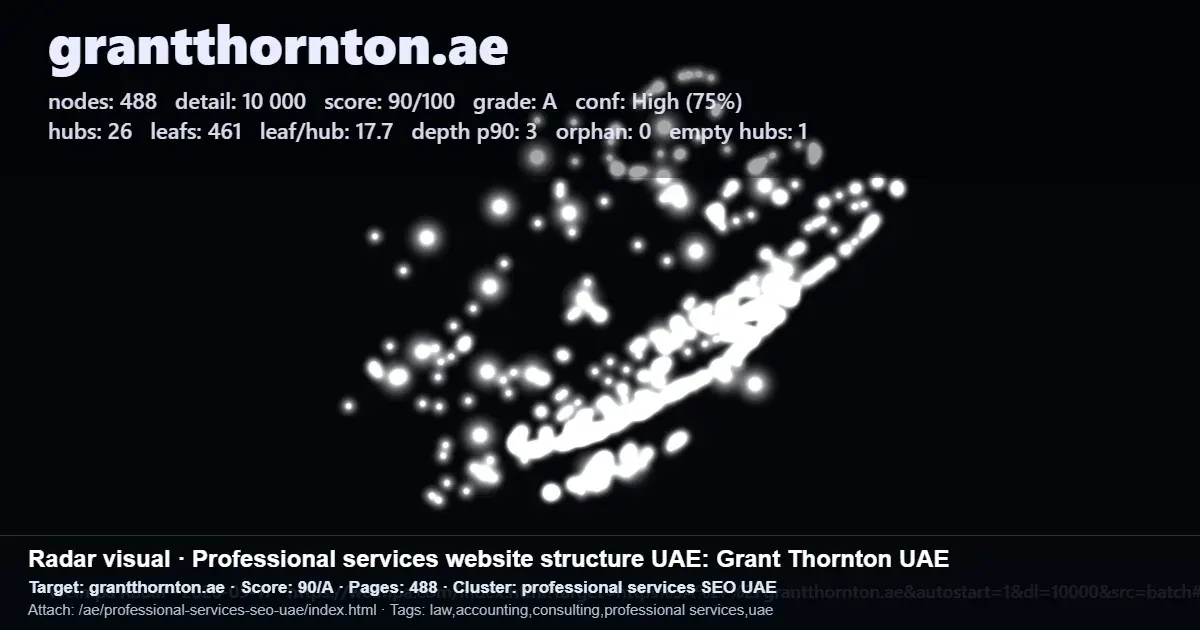
What this page covers
SEO audit prioritization workflow for UAE websites
A practical SEO audit prioritization workflow starts by checking how a public UAE website is structured, which pages and hubs are visible, and where discovery is being blocked.
The aim is not to capture every issue at once. It is to decide what should be fixed first so teams can improve indexing, structure, and search demand coverage in a clear order.
In brief
- Start with a diagnostic view of pages, hubs, leaves, and access checks so major structural blockers are visible before deeper SEO work begins.
- Prioritize issues that affect discovery first, including problems with sitemap quality, robots rules, homepage access, and overall site structure.
- Use those findings to plan the next layer of work, such as demand mapping, hub and leaf planning, internal linking, deployment, and monitoring.
What to do
For UAE websites, a useful prioritization workflow begins with a structured scan rather than a scattered list of recommendations. The first pass should show how the site is organised, which public pages and hubs are visible, and where discovery may be blocked for Google and AI-powered search.
Once that structure is clear, the next step is to separate core blockers from secondary improvements. This helps teams focus first on issues tied to indexing, sitemap quality, weak entry points, and other structural risks before moving into wider page expansion or content production.
After the highest-impact issues are clear, the workflow can move into building the missing search layer. That may include demand mapping by market, location, role, industry, and search intent, followed by hub and leaf planning, evidence-backed page creation, internal linking, deployment, sitemap submission, and growth monitoring.
What to keep in mind
This workflow is most useful for companies, marketers, SEO teams, agencies, and digital platforms that want a practical diagnostic before committing to larger SEO work. It suits teams that need a clearer view of what is visible, what is blocked, and what should be fixed first.
It is especially relevant when a website is not yet organised around search demand, when important workflows remain hard to discover, or when there is limited visibility into how sitemaps, internal links, and content clusters affect discovery. It also helps when teams are comparing conflicting SEO advice and need a more structured order of action.
The UAE focus here is broad rather than niche-specific. The context includes Dubai, Abu Dhabi, Sharjah, free zones, and sectors such as B2B services, real estate, clinics, SaaS, ecommerce, education, logistics, law firms, and agencies. As one benchmark example of strong structure, a referenced SEO audit cluster shows moz.com with a score of 100 out of 100, grade A, 55 hubs, and 6,005 leaf pages.