
Free Radar Scan FAQ for UAE Websites
What this page covers
Free Radar Scan FAQ for UAE Websites
Run one free Radar scan on a public UAE website, review the URL structure map, and decide whether it is useful for your next SEO or GEO step.
Radar is built for website structure diagnostics. It turns a scan into clear review points such as missing hubs, orphan leaves, shallow clusters, and blocked discovery paths.
In brief
- A free Radar scan is meant to be practical. It shows specific structure issues to review instead of giving you a vague site summary.
- Radar only scans publicly reachable pages. It does not access content behind logins, paywalls, permissions, or strong bot protection.
- If standard discovery is blocked, you can use a JSON URL snapshot import to visualize the website structure from the URLs you provide.
What to do
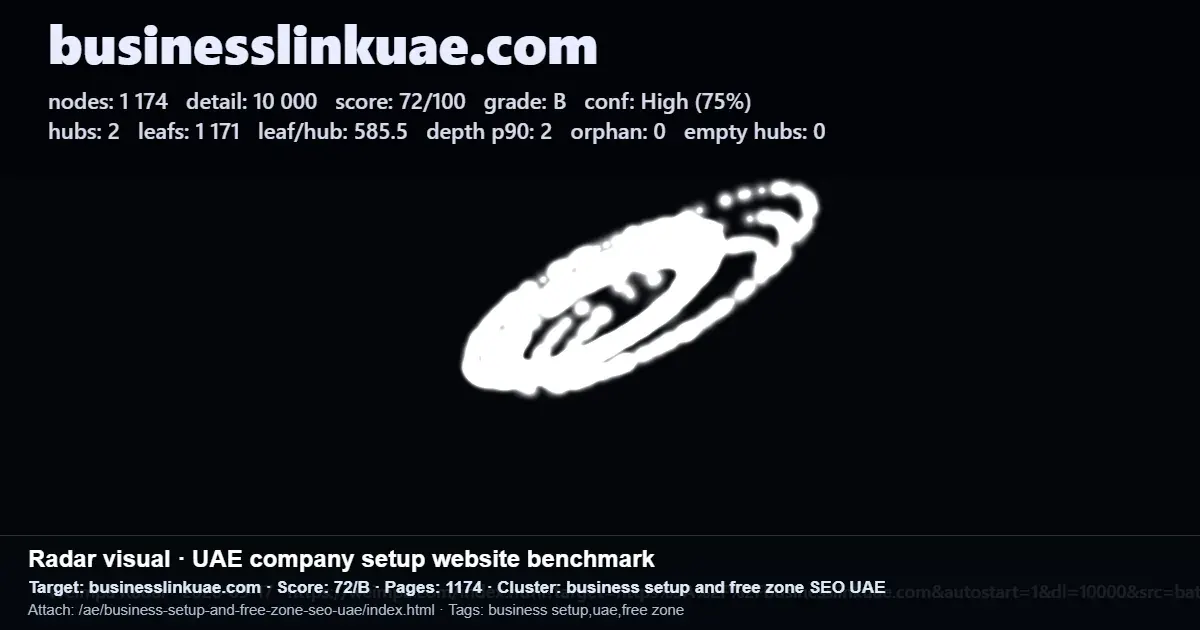
Start with one scan of a public website and inspect the map it generates. You can review the structure quickly, share the link with your team, or save a PNG card, then decide whether this view should guide your next SEO or GEO actions.
The main benefit is clarity. Radar highlights concrete website structure issues such as missing hubs, orphan leaves, shallow clusters, and weak discovery paths, so teams can focus on architecture problems instead of broad assumptions.
If the website cannot be scanned because discovery is blocked by access controls or similar restrictions, switch to a JSON URL snapshot import. That keeps the review focused on the exact set of URLs you want to visualize.
What to keep in mind
This page is most useful for teams that want a fast first look at website structure before committing to deeper follow-up work. It fits a practical review process where the goal is to inspect the map and judge whether it supports the next step.
Radar is not designed for pages hidden behind logins, paywalls, or aggressive bot protection. When those limits prevent normal scanning, the supported alternative is to visualize a URL snapshot through JSON import.
A free scan is an initial diagnostic step, not a promise of results. The process is simple: run one scan, inspect the structure map, share it if needed, and decide whether to act on the issues it reveals.