
SEO Audit Readiness Checklist for UAE Websites
What this page covers
SEO Audit Readiness Checklist for UAE Websites
Use this checklist before hiring an agency, briefing a consultant, or starting a wider SEO project. It helps turn uncertainty about your UAE website’s technical SEO into a clearer, more practical audit brief.
A useful readiness check should go beyond a single score. Radar-style scans can reveal pages, hubs, leaf pages, site depth, empty hubs, and other structural signals so the audit starts with a more defined view of the site.
In brief
- Review the site structure first, including total pages, hubs, leaf pages, depth, leaf-to-hub balance, and whether important hubs look thin or empty.
- Check whether core topics have dedicated, easy-to-find pages instead of relying only on broad generic pages or weak internal linking.
- Use the checklist to compare vendor proposals, challenge vague recommendations, and spot technical blockers before wider SEO work begins.
What to do
SEO audit readiness starts with a structured inventory of the website. In this topic cluster, useful measures include nodes, pages, hubs, leaf pages, leaf-to-hub ratio, depth, score, and grade. That gives teams a practical baseline before asking for recommendations or implementation plans.
The next step is to test whether the structure matches how the business is presented online. On more complex websites, this means checking whether key service, location, route, corridor, industry, or topic areas have clear dedicated pages supported by discoverable site architecture.
A strong readiness checklist creates a neutral brief that can be shared internally or with external SEO providers. It helps validate competing recommendations, separate technical issues from broader content planning, and focus the audit on the areas most likely to limit future growth.
What to keep in mind
This page is most useful for teams that are unsure about current technical SEO health, have received conflicting advice, or want an independent diagnostic before committing to a larger SEO engagement. It is also relevant when internal SEO knowledge is limited and proposals are difficult to assess.
A readiness checklist is a preparation tool, not a repair plan. It helps define what should be reviewed and prioritised, but it does not replace implementation. Its value is in making the audit scope clearer, more focused, and easier to share before longer-term decisions are made.
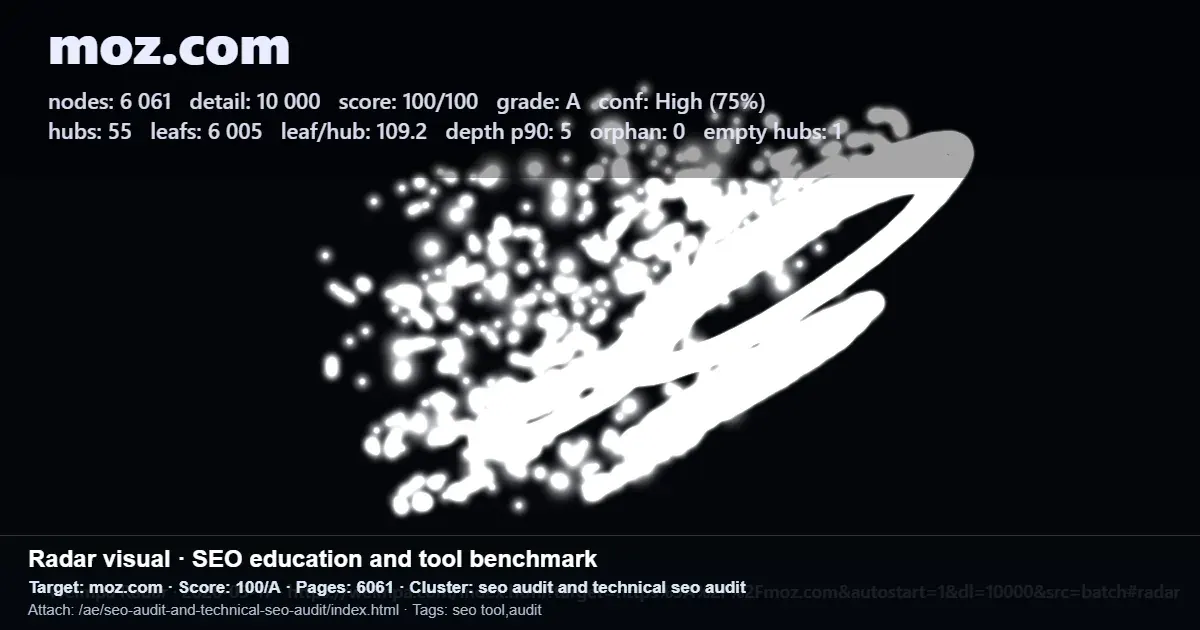
Benchmark examples show that structure patterns vary widely across websites. In the sample scans, Moz appears with 6,061 pages and a 100/A score, Emaar with 1,843 pages and a 99/A score, and Property Finder with 10,012 pages and a 78/B score. Different page counts and structures create very different audit starting points.