
Search-Layer Monitoring Process for UAE Websites
What this page covers
Search-Layer Monitoring Process for UAE Websites
Search-layer monitoring helps UAE teams see how Google and AI-powered search interpret the structure of a public website over time.
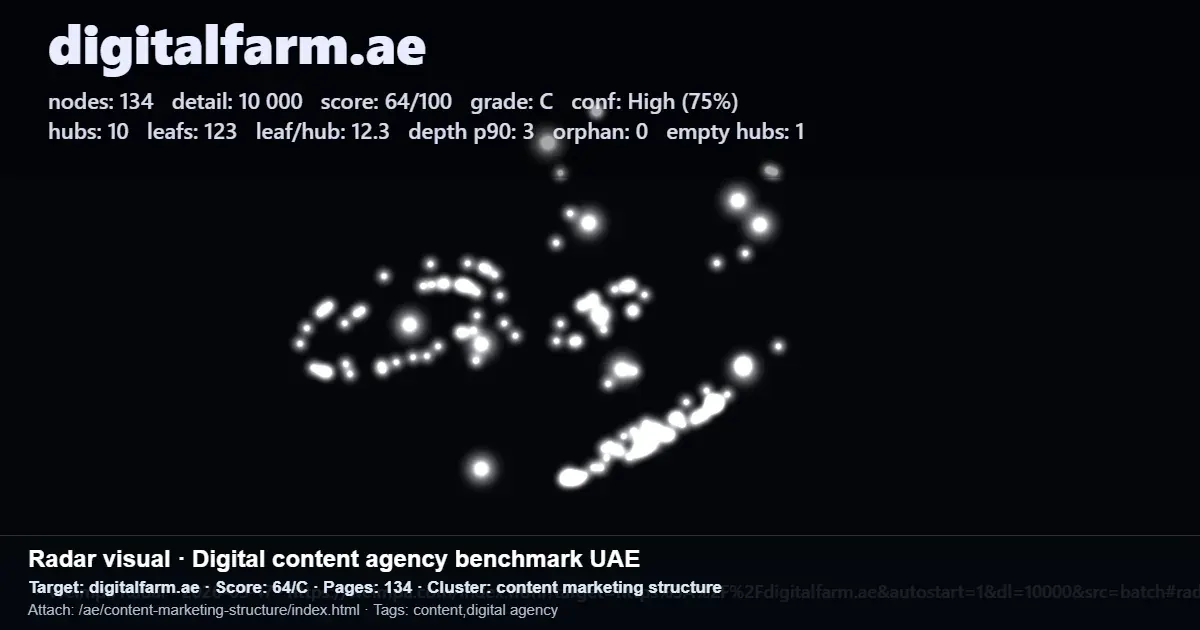
Radar scans visible pages, hubs, leaf pages, sitemap and robots signals, and key access points to show weak spots and what to fix first.
In brief
- Use recurring structural checks to track how pages, hubs, and weak spots change as the website grows, instead of relying only on a one-off audit.
- Review discovery signals closely, including whether the sitemap covers only part of the site and whether important public paths are harder for search to reach.
- For larger UAE groups, compare multiple websites to find structural gaps, overlap, and the search-layer fixes that should be prioritised first.
What to do
A search-layer monitoring process starts with a scan of the public website. Radar checks how the site is structured, which pages and hubs are visible, where discovery may be blocked, and whether core signals such as the sitemap, robots file, and home page access need attention.
The next step is to turn the findings into a practical repair plan. When a structural gap appears, follow-up work can include demand mapping, hub and leaf page planning, evidence-backed page production, internal linking, deployment, sitemap submission, and ongoing monitoring.
For UAE websites, this process suits teams that want a clearer view of search visibility without depending only on ads. The wider market focus includes B2B services, real estate, clinics, SaaS, ecommerce, education, logistics, law firms, and agencies.
What to keep in mind
Monitoring matters most when the website keeps changing. A one-time audit can become outdated as pages, hubs, sitemap entries, or robots settings shift, so repeated checks help teams catch new issues earlier.
The process is diagnostic and structural. Radar shows a website graph, pages, hubs, leaves, weak spots, readiness scoring, and practical next steps, giving teams a clearer view of how public discovery is working.
One UAE benchmark example referenced a scanned site with 2,107 pages, 10 hubs, 2,096 leaf pages, and a score of 78 with a B grade. That type of output shows the kind of structural snapshot teams can use to prioritise fixes, not a promise of rankings or traffic.