
Scan my website for seo
What this page covers
Scan my website for seo
A website SEO scan helps you spot technical and visibility issues that can affect how search engines and AI-driven tools understand your site.
A practical scan can check site structure, JavaScript rendering, status codes, structured data, language setup, performance, and newer visibility signals such as llms.txt.
In brief
- Use a scan to turn a website review into a clear workflow: identify issues, fix priorities, and rescan to confirm what changed.
- A useful SEO scan looks beyond basic page checks and reviews rendering, structured data, language signals, performance, and AI visibility factors.
- Be aware of access limits: some scanners cannot review sites behind logins, paywalls, access controls, or strict bot protection.
What to do
If you want to scan your website for SEO, start with the areas most often linked to visibility problems: site structure, JavaScript rendering, status code handling, structured data, language setup, and performance. These are common sources of indexing, crawling, and interpretation issues across modern websites.
For teams, a simple scan process works best: review the current state, record the main findings, decide what to fix first, and run a rescan after updates. That keeps the work focused and makes the results easier to use across SEO, content, and development discussions.
Some scans also go beyond classic SEO checks and look at how a site may be understood by AI-oriented systems. In that wider view, signals such as structured data and llms.txt can help when you want a broader picture of search and AI visibility.
What to keep in mind
A scan is a diagnostic step, not a ranking promise. It helps you identify issues and opportunities, but it cannot guarantee search performance or position changes.
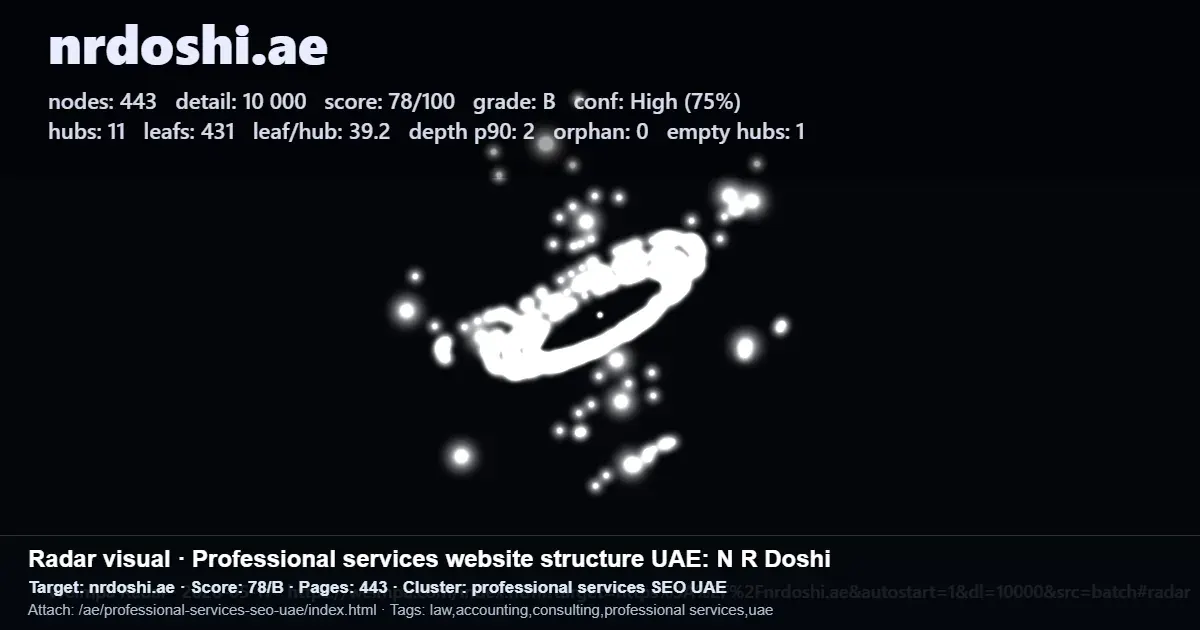
Coverage depends on site access. Radar does not scan sites behind logins, paywalls, access controls, or aggressive bot protection. When automated discovery is blocked, it can still visualize a URL snapshot you provide through JSON import.
This kind of review is most useful when you need clear findings to prioritise fixes and then measure progress with a rescan. It is less useful if you expect a tool to bypass blocked sections of your site or guarantee rankings.