
Search-Layer Monitoring Checklist for UAE Websites
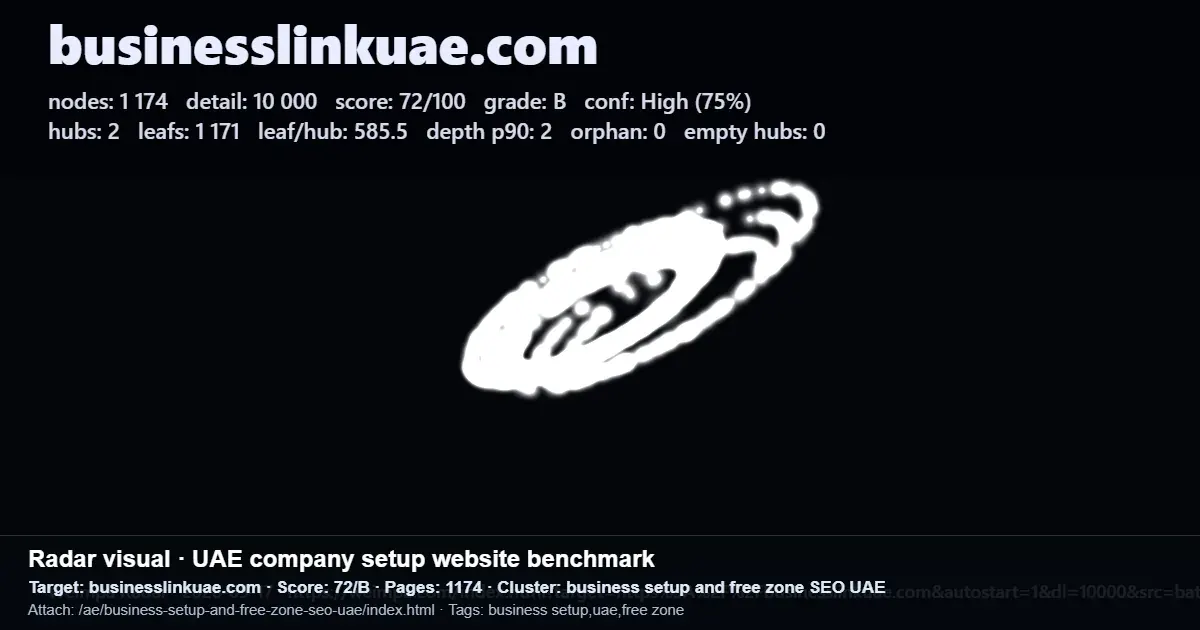
What this page covers
Search-Layer Monitoring Checklist for UAE Websites
A UAE website needs more than a one-off SEO review. Search-layer monitoring helps teams see how Google and AI-powered search interpret site structure, visible pages, hubs, weak points, and blocked discovery paths.
Use this checklist to review structure, indexing access, sitemap and robots signals, visibility changes, and the updates to prioritise after each scan.
In brief
- Check whether the public website shows clear pages, hubs, and leaves, and whether sitemap, robots, or homepage access creates discovery issues.
- Track search visibility as a moving signal. Rankings can change because of algorithm updates, competitor activity, or search feature rollouts.
- Do not depend on one metric alone. Compare position, impression share, real search checks, and AI-search mentions where links may not be shown.
What to do
Start with the structure layer. A Radar scan checks how a public website is organised, which pages and hubs are visible, where discovery is blocked, and what should be fixed first. This gives UAE teams a practical starting point before changing navigation or expanding content.
Then monitor visibility carefully. Search visibility can shift day by day, and Google Search Console data may be delayed or sampled. A stronger checklist compares average position, impression share, and real search checks instead of treating one dashboard metric as the whole picture.
Finally, turn monitoring into action. When a scan shows weak entry points, blocked discovery, or structural gaps, the next steps may include demand mapping, hub and leaf planning, evidence-backed pages, internal linking, sitemap submission, and ongoing growth monitoring.
What to keep in mind
This checklist fits companies, marketers, SEO teams, agencies, and digital platforms that want a clearer view of how their website appears to Google and AI-powered search in the UAE. It is relevant across sectors where inbound search matters.
It is especially useful when a site changes often. One-off audits can become outdated as pages, hubs, internal links, sitemaps, and robots settings change. Repeated structural checks help teams spot shifts in the site graph, indexing access, and weak points over time.
This is a diagnostic process, not a promise of rankings or traffic. Strong rankings on low-volume queries may add little traffic, and in AI search a brand may appear in an answer without a clickable link, so visibility should be tracked with that broader definition in mind.