
Internal link map for hub-and-leaf search layers
What this page covers
Internal link map for hub-and-leaf search layers
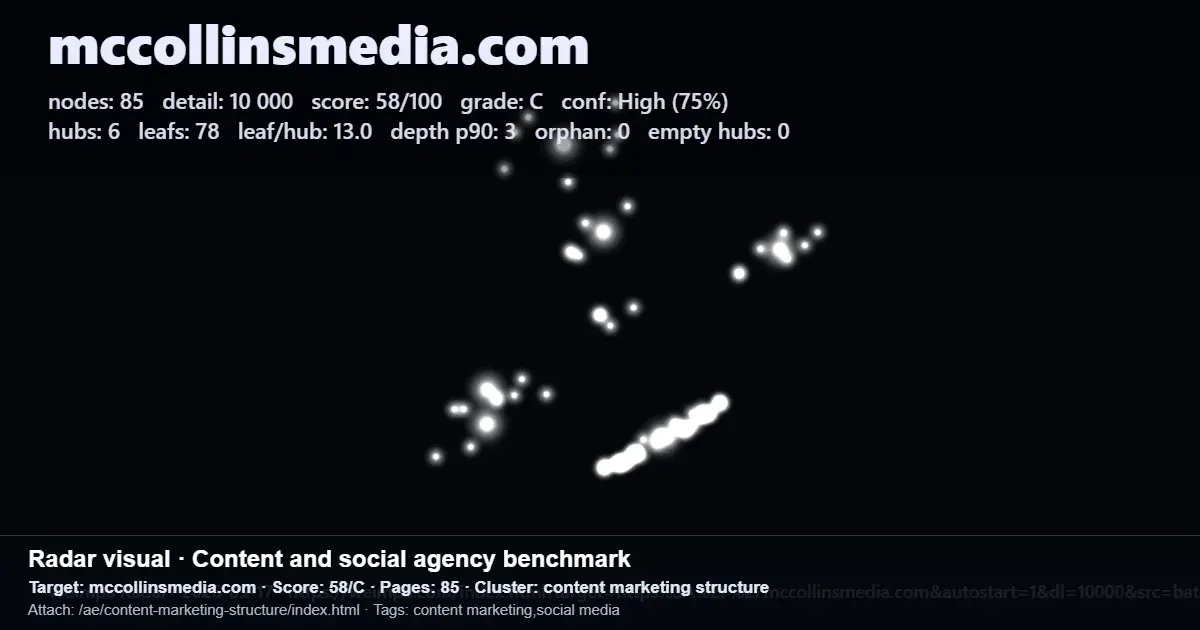
An internal link map for hub-and-leaf search layers shows whether leaf pages are properly grouped under hubs or left scattered across the site.
A useful review checks that hub pages exist, leaf clusters sit under them, and the overall structure does not look fragmented when viewed as a URL map.
In brief
- If leaf pages are not grouped under hubs, the practical fix is to create the missing hub pages and add clear hub-to-leaf links.
- A URL structure map built around home, hub, and leaf layers helps teams quickly confirm whether the site architecture is logical.
- Shareable outputs such as a link or PNG card make it easier to review the structure with teammates without a long call.
What to do
Start with a URL structure map that shows the home, hub, and leaf layers together. This gives a quick view of whether the site already has clear hubs, whether leaf clusters sit beneath them, and whether any sections feel disconnected.
When the map shows leaf pages without a clear parent hub, the next step is usually simple: add the missing hub pages and link hubs and leaves directly. The goal is not a complex model, but a structure that makes topic groupings clear and easy to follow.
A practical workflow is to run a scan, confirm that hubs and leaf clusters are present, and then share the result with a teammate or client. If the structure is easy to understand from the shared output, the map is doing its job.
What to keep in mind
The most grounded output for this kind of review is a URL structure map with home, hub, and leaf layers, plus a share link or PNG card. That keeps the discussion focused on the structure itself rather than opinions about it.
Example scan output may also include counts and structure signals such as hubs, leaves, leaf-to-hub ratio, depth, orphan pages, and empty hubs. These details help teams move from a vague impression to a concrete structural check.
This page is most useful when you need to validate an existing structure in minutes. One stated demo limit is up to 1,000 pages per run, so it works best as a fast diagnostic view rather than a full strategy exercise on its own.