
B2b directory seo structure and indexing uae
What this page covers
B2b directory seo structure and indexing uae
For UAE directory-style sites, structure and indexing depend on how clearly hubs connect to leaf pages. In directory and marketplace SEO, page depth, hub coverage, and internal links strongly affect crawlability at scale.
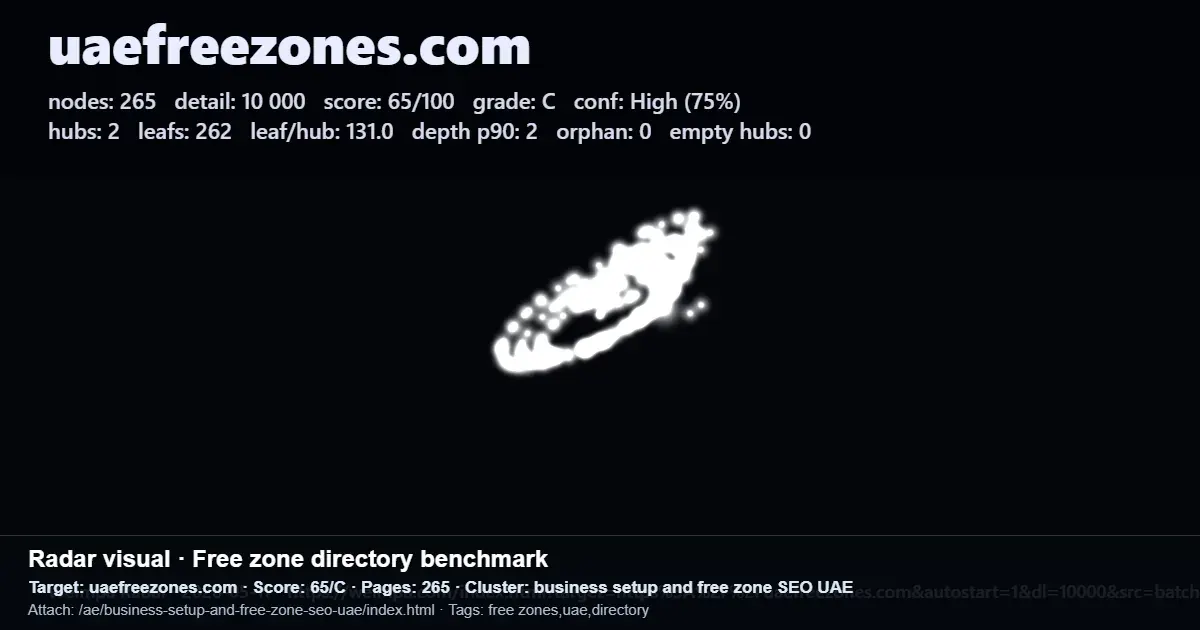
Radar helps compare a B2B directory with established UAE site structures, then spot thin hubs, important pages buried too deep, or linking patterns that make key sections harder to discover and index.
In brief
- A B2B directory performs better when categories, services, locations, and listing pages follow a clear hub-to-leaf structure instead of a loose set of disconnected URLs.
- Indexing usually improves when important service and location combinations are supported by stronger hubs, consistent internal linking, and page depth that stays under control.
- Radar is used to benchmark UAE site structures and show where a directory may be held back by weak hubs, missing page combinations, or scale patterns that reduce visibility.
What to do
UAE marketplace benchmarks show that large catalogues can remain structurally usable at scale. Levelshoes.com is shown with 10,002 pages, 1 hub, 10,000 leaf pages, a depth p90 of 2, and a 71 out of 100 B grade, while Dragonmart.ae is shown with 2,501 pages, 5 hubs, 2,495 leaf pages, a depth p90 of 3, and a 74 out of 100 B grade.
These examples suggest that a directory can support thousands of pages when hub coverage, leaf organisation, and page depth remain controlled. A different benchmark, DMCC, is shown with 1,640 pages, 38 hubs, 1,601 leaf pages, and a 99 out of 100 A grade, which points to a denser hub layer and a stronger structural score for a UAE business-focused site.
For a UAE B2B directory, this creates a practical review framework: compare hub count, page depth, and how clearly service and location coverage is mapped. That helps identify where the site is too flat, too sparse in hubs, or harder for search engines to crawl consistently.
What to keep in mind
The UAE-focused 1000&1 Pages service is described as building inbound traffic from Google based on real search demand. Its stated process includes researching and validating demand by location, role, and intent, then building an English hub-and-leaf content matrix.
That matters for B2B directories because scaling across categories, services, and UAE locations can create overlap, weak coverage, or indexing waste if the structure is not planned properly. The stated approach focuses on customer scenarios and demand mapping rather than simply publishing more pages.
Across the wider UAE SEO market, many agencies combine strategy and implementation, and one cited competitor publishes local and enterprise SEO price ranges. The more grounded distinction here is structural: search-demand research, hub-and-leaf planning, and scalable content architecture designed for crawlability and indexing.