
AI Search Readiness FAQ for UAE Websites
What this page covers
AI Search Readiness FAQ for UAE Websites
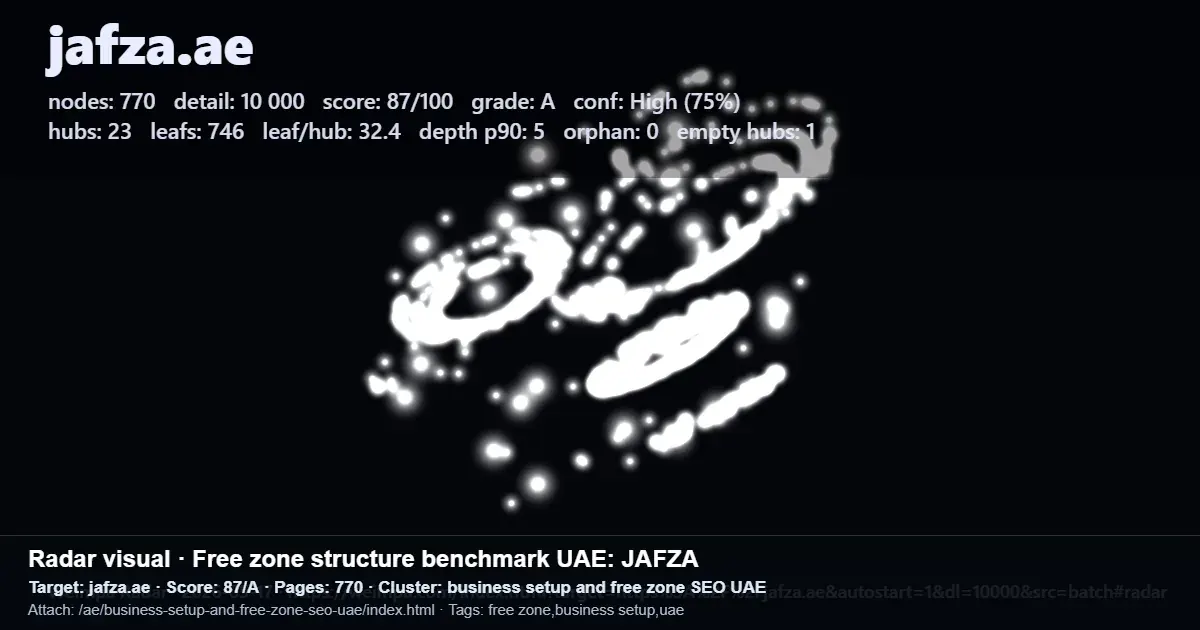
A practical AI search readiness review starts with how your website is discovered and understood. Radar checks robots.txt, looks for sitemap URLs, and maps the site into a clear structure graph.
If sitemap discovery is incomplete, the review can fall back to a shallow crawl within fair use limits. That gives UAE website teams a useful starting point before changing navigation, sections, or page relationships.
In brief
- Start by checking whether robots.txt exposes usable sitemaps and whether the site can be mapped into a clear, connected URL structure.
- Common fixes include improving sitemap coverage, reducing orphan pages, and making hub-to-leaf navigation more consistent across key sections.
- If crawling is restricted, the review can still use a provided JSON snapshot for import, and AI interpretation remains part of the workflow.
What to do
For AI search readiness, the first step is to see the real site structure rather than rely on assumptions. Radar checks robots.txt for sitemap discovery, reads the sitemap URLs it finds, and builds a site graph so teams can review how pages and sections connect.
Once that structure is visible, the next actions are easier to prioritise. The main structural fixes usually involve improving sitemap coverage, removing orphan pages, and making hub-to-leaf navigation more consistent across the most important clusters.
The workflow is still useful when access is limited. Runs can scale to 20,000 pages, AI interpretation is included, two-site comparisons can be viewed on one screen, and JSON import is available when crawling is blocked but a usable snapshot can be provided.
What to keep in mind
This kind of review is useful when a team needs a grounded view of current AI search readiness and wants to know whether the existing website structure supports that goal. It is especially relevant when there is pressure to respond to AI search quickly but no clear structural plan yet.
It tends to help most when structure is the main issue to solve first. Typical signals include weak sitemap coverage, orphan pages, and uneven hub-to-leaf patterns across major sections, categories, or topic clusters.
There are limits to what the review can show. If sitemap discovery fails, the fallback is only a shallow crawl under fair use limits, so visibility depends on available access. If crawling cannot be used at all, the review depends on a usable JSON snapshot for import.